
"Ruiru11 variety"
400 article(s) found

Introduction to the characteristics of coffee producing areas in Kenya, graded flavor description, taste and origin.
Kenya Coffee production area characteristic practice grading Flavor description Taste Origin is fragrant, full-bodied, with fruit flavor, rich and perfect taste. Kenyan coffee has a wonderful fruit flavor, tastes like BlackBerry and grapefruit, and is a favorite of many coffee gluttons. This coffee has an excellent medium purity, crisp and refreshing taste. The flavor is fresh and the most suitable

Introduction of Kenyan Coffee with Fruit Flavor description of Grinding degree, Price and Flavor
It entered Kenya in the 19th century, when Ethiopian coffee drinks were imported into Kenya through southern Yemen. But it was not until the early 20th century that the bourbon was introduced by the St. Austen Mission (St.AustinMission). Kenyan coffee is mostly grown at an altitude of 1500m, 2100m, and is harvested twice a year. To ensure that only ripe berries are picked, people must be in the forest

Introduction to baking instructions for the flavor and taste of boutique coffee at Mchana Estate Mechana Manor in Kenya
AA Top Mchana Manor, Mchana Estate, Kenya, located in the Ruiru district of Thika province, north of the Kenyan capital NAIROBI, began to grow coffee in 1950. As Britain / France / West / Portugal / Netherlands and other countries were maritime powers in the 18th century, all regions such as Africa / Central and South America / South Asia were subject to their invasion and seizure of resources and looting, such as the notoriety of Britain.

Introduction to the flavor of Kenyan coffee
Kenya Coffee Kenya Coffee Kenya is the origin of Arabica coffee trees in Kenya, but it was not until the beginning of the 20th century that coffee cultivation began. Missionaries introduced Arabica trees from the leaves in the 19th century, but did not plant them in large quantities. It was not until 1893 that coffee was cultivated on a large scale after the introduction of Brazil's ancient bourbon seeds.
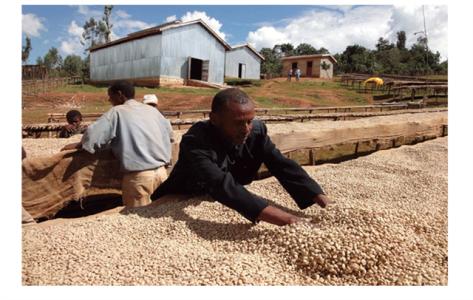
The flavor of Kenya's Kam Chu Valley coffee beans with strong fruit acids Description
Kenyan Coffee Bean The Kenyan government takes the coffee industry extremely seriously, and it is illegal to cut down or ring coffee trees here. Kenya's coffee buyers are world-class buyers of premium coffee, and no country grows, produces and sells coffee as consistently as Kenya. All coffee beans

Description of Kenyan Coffee Flavor with acidity and Fruit Flavor introduction to the characteristics of varieties
It entered Kenya in the 19th century, when Ethiopian coffee drinks were imported into Kenya through southern Yemen. But it was not until the early 20th century that the bourbon was introduced by the St. Austen Mission (St.AustinMission). Kenyan coffee is mostly grown at an altitude of 1500m, 2100m, and is harvested twice a year. To ensure that only ripe berries are picked, people must be in the forest

Kenya Coffee Bean Variety Appearance Characteristics Kenya Fine Coffee Bean Flavor Taste Description
Don't underestimate Kenya's small farmers. They are no different from ants and soldiers. Their overall productivity is higher than that of large farms, about six to four, which is quite rare in soybean producing countries. Kenyan coffee is widely appreciated by connoisseurs, thanks in large part to smallholder farmers who work hard to grow good coffee in the foothills. In addition, Kenya beans must have a strict grading system, washing plant out of coffee beans, according to the size

Fragrant and full-bodied flavor description of Kenyan coffee beans introduction of varieties in manor area
Delicious coffee, in addition to pay attention to the appropriate temperature, but also have the right amount. Drinking coffee is not like drinking or juice, a full cup of coffee, watching it will lose interest in drinking. Generally, it is only seven or eight minutes full for the right amount, moderate amount of coffee will not only stimulate the taste, after drinking it will not have a greasy feeling, but endless aftertaste. At the same time, the right amount of coffee can appropriately promote the recovery of the body.

Don't underestimate Kenyan coffee.
Kenya lies to the north of Ethiopia, the origin of Arabica coffee trees, but it was not until the early 20th century that it was engaged in coffee cultivation. In the 19th century, missionaries introduced Arabica trees from Yemen, but did not plant them in large quantities. It was not until 1893, when Brazil's ancient bourbon seeds were introduced, that coffee was cultivated on a large scale. That is to say, the current Kenyan coffee has Brazilian ancestry.

What are the characteristics of Kenyan coffee beans
There are two types of coffee farms in Kenya. One is a large plantation that covers an area of more than five acres, but the average elevation is low. In the case of Kenyan coffee, the coffee beans of the large farms are of medium quality. The best Kenyan beans come from small farms, most of which are located in the foothills or volcanic slopes above 5,000 to 6,000 feet. Each small farmer has a capacity of only 20 to 70 bags per season.
What is the transmission path of coffee? Introduction of basic varieties
A summary of the transmission path of coffee from Ethiopia to Yemen (595-850), Yemen to India and Java (1600), Java to the Netherlands (1706), Netherlands to Paris (1714), Paris to Bourbon (1718) Martinique, Haiti (1723), Mexico, Brazil and other Central and South American countries (1727) last to East Africa (1900). At first, France was the main coffee supplier in Europe.

Can coffee be relieved at coffee farms in Kenya?
Kenya is bordered to the north by Ethiopia, the origin of Arabica coffee trees, but it was not until the beginning of the 20th century that coffee cultivation began. In the 19th century, missionaries introduced Arabica trees from the leaves, but did not plant them in large quantities. It was not until 1893 that coffee was cultivated on a large scale because of the introduction of Brazil's ancient bourbon seeds. That is to say, Kenyan coffee is of Brazilian origin, because of water.

Washed Kenyan Arabica Coffee
Kenya is bordered to the north by Ethiopia, the origin of Arabica coffee trees, but it was not until the beginning of the 20th century that coffee cultivation began. In the 19th century, missionaries introduced Arabica trees from the leaves, but did not plant them in large quantities. It was not until 1893 that coffee was cultivated on a large scale because of the introduction of Brazil's ancient bourbon seeds. That is to say, Kenyan coffee is of Brazilian origin, because of water.

Kenyan Coffee Origin Esopia Coffee production area introduces boutique coffee
Kenya is bordered to the north by Ethiopia, the origin of Arabica coffee trees, but it was not until the beginning of the 20th century that coffee cultivation began. In the 19th century, missionaries introduced Arabica trees from the leaves, but did not plant them in large quantities. It was not until 1893 that coffee was cultivated on a large scale because of the introduction of Brazil's ancient bourbon seeds. That is to say, Kenyan coffee is of Brazilian origin, because of water.

Sour coffee beans are recommended. Kenyan coffee is sour. Sour coffee beans are more expensive.
Professional coffee knowledge exchange more coffee bean information please follow the coffee workshop (Wechat official account cafe_style) the source of sour Kenya beans friends like sour coffee beans should like Kenya, it is not as elegant as the acidity of Yega Xuefei, but has a very outstanding sour, round, sweet and thick taste. This is due to planting in Kenya.

Kenya coffee production introduction three beans guest coffee roaster
Kenya borders Ethiopia to the north, where the Arabica coffee tree originated, but coffee cultivation did not begin until the early 20th century. Missionaries introduced Arabica trees from Yemen in the 19th century, but they did not plant them in large quantities until 1893, when they introduced the ancient seeds of Bourbon coffee from Brazil. Coffee in Kenya is of Brazilian descent.
What kind of coffee are there in Kenya coffee fruit producing areas? Kenya
Kenya Coffee is the origin of Arabica coffee trees in Kenya, but it was not until the beginning of the 20th century that it began to cultivate coffee. In the 19th century, missionaries introduced Arabica trees from leaves, but did not plant them in large quantities. It was not until 1893 that coffee was cultivated on a large scale after the introduction of Brazil's ancient bourbon seeds, that is, Kenyan coffee.

Introduction to the flavor and taste characteristics of the crisp and refreshing coffee manor in Jinchu Valley, Kenya
Kenyan coffee is mostly grown at an altitude of 1500m, 2100m, and is harvested twice a year. To ensure that only ripe berries are picked, people must tour the forest about seven times. Kenyan coffee is grown by small farmers. After they harvest the coffee, they first send the fresh coffee beans to the cooperative cleaning station, where the washed and dried coffee is covered with parchment beans.

Kenya Coffee Bean Flavor Kenya Coffee Bean Origin Fine Coffee
Kenya borders Ethiopia to the north, where the Arabica coffee tree originated, but coffee cultivation did not begin until the early 20th century. Missionaries introduced Arabica trees from Yemen in the 19th century, but they did not plant them in large quantities until 1893, when they introduced the ancient seeds of Bourbon coffee from Brazil. Coffee in Kenya is of Brazilian descent.

Kenya coffee beans characteristics of the production area taste grinding scale processing method aroma yield trend introduction
Kenya coffee is mostly grown at altitudes of 1500- 2100 meters and harvested twice a year. To make sure only ripe berries are picked, people have to make about seven rounds through the woods. Kenyan coffee is grown by small farmers who harvest the coffee and send it fresh to a cooperative washing station, where the washed, dried coffee is washed into parchment coffee beans (i.e., coated inside).